
Commercial Insurance

Does your driver carry it or just taking chances? (EZ Shuttle has it)
If you’re being paid to shuttle passengers but you don’t carry commercial auto insurance, a serious accident creates a cascade of legal, financial, and even criminal exposure. The key issue is that once you accept compensation, you’re no longer operating as a private driver — you’re functioning as a for‑hire carrier, which triggers commercial‑use rules and insurance requirements.
What happens immediately after the accident
Your personal auto policy will almost certainly deny the claim. Personal policies exclude coverage when the vehicle is used “for hire.” That means no coverage for injuries, property damage, or your own vehicle.
You become personally liable for all damages. This includes medical bills, lost wages, pain and suffering, and property damage for every injured party — passengers, other drivers, pedestrians, and businesses.
Passengers may sue you directly. Passengers in commercial‑use vehicles have strong rights and multiple avenues to pursue compensation. They can file negligence claims against the driver and any business entity involved.
Financial consequences
Unlimited personal liability. Without commercial insurance limits to shield you, your home, savings, future income, and business assets can be targeted in lawsuits.
Legal defense costs come out of your pocket. Commercial policies normally provide attorneys; without one, you pay for your own defense.
Bankruptcy becomes a real risk. Injury claims can easily reach six figures or more, especially when multiple passengers are involved.
Legal and regulatory consequences
Operating illegally as a for‑hire carrier. If your shuttle meets FMCSA criteria — such as carrying 9–15 passengers for compensation or being part of interstate commerce — you are required to follow commercial motor vehicle regulations, including insurance.
Fines and penalties. States can impose civil penalties for operating a commercial service without proper insurance or authority.
Possible criminal charges. In some jurisdictions, knowingly operating a for‑hire vehicle without required insurance can trigger misdemeanor charges, especially if injuries occur.
Impact on passengers and claims
Passengers may not have alternative coverage. Travel insurance often does not cover shuttle accidents, leaving passengers to pursue you directly for compensation.
Courts tend to favor injured passengers. Judges and juries expect commercial operators to carry proper insurance, and operating without it is often viewed as negligence per se.
How this plays out in real life
A single accident can lead to:
Tens of thousands in medical bills per passenger
Multiple lawsuits
Loss of your driver’s license or business license
Seizure of business assets
Long‑term wage garnishment
If your Uber/Lyft driver offers to do your ride off independently
To legally pick up paying passengers outside of rideshare apps like Uber or Lyft, you are operating as an independent transportation business. This requires a Commercial Livery Insurance policy.
Why Personal or Rideshare Policies Won't Work

Personal Auto Insurance: Expressly excludes any accidents that happen while driving for compensation ("for-hire" exclusion).
Rideshare Endorsements: Only fill the coverage gaps while logged into an app (e.g., waiting for an Uber request). They will deny any claim if you transport a passenger for cash or a private booking outside the Uber platform.
What You Need for Independent Paid Rides in NC
If you want to accept private fares on your own, you must set up full commercial coverage and state compliance:
1. Commercial Livery Policy
You need a commercial auto policy specifically rated for for-hire passenger transport (livery).
Required Limits: North Carolina requires a minimum of $1,500,000 Combined Single Limit (CSL) in liability coverage for passenger vehicles carrying up to 15 people.
2. NC "For-Hire" Licensing & Registration
To attach commercial livery insurance to your vehicle in NC, you must:
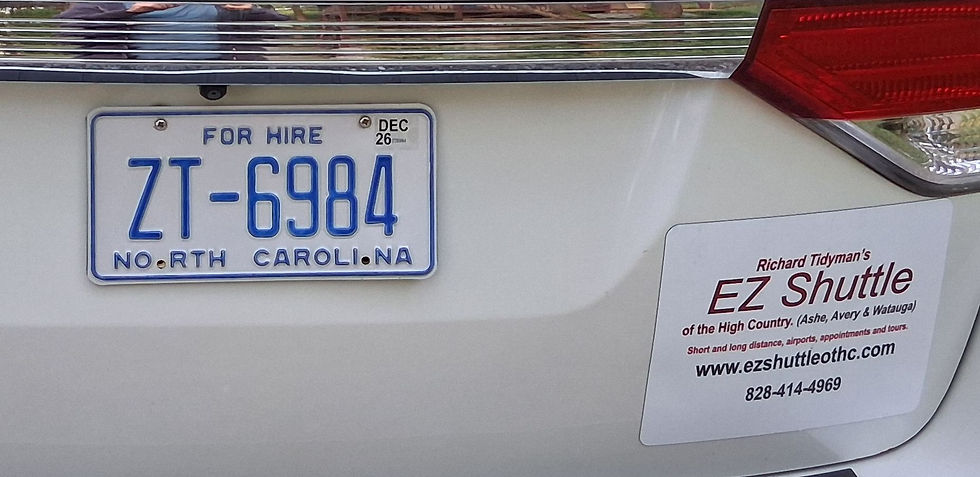
Register the vehicle for "For-Hire" status with the NC DMV and get For-Hire license plates.
Have your insurance provider submit Form E (Certificate of Financial Responsibility) directly to the state.
3. Tax Registration
North Carolina requires independent for-hire passenger services to register with the NC Department of Revenue to collect and remit the 1.5% highway use/transportation tax on passenger fares.
Bottom Line
If you want to take private clients on the side, you can't just rely on your Uber status—you essentially need to operate like a private car service or taxi company. The policy will be significantly more expensive than standard personal insurance, but it is the only legal way to ensure you are covered in an accident.


Comments